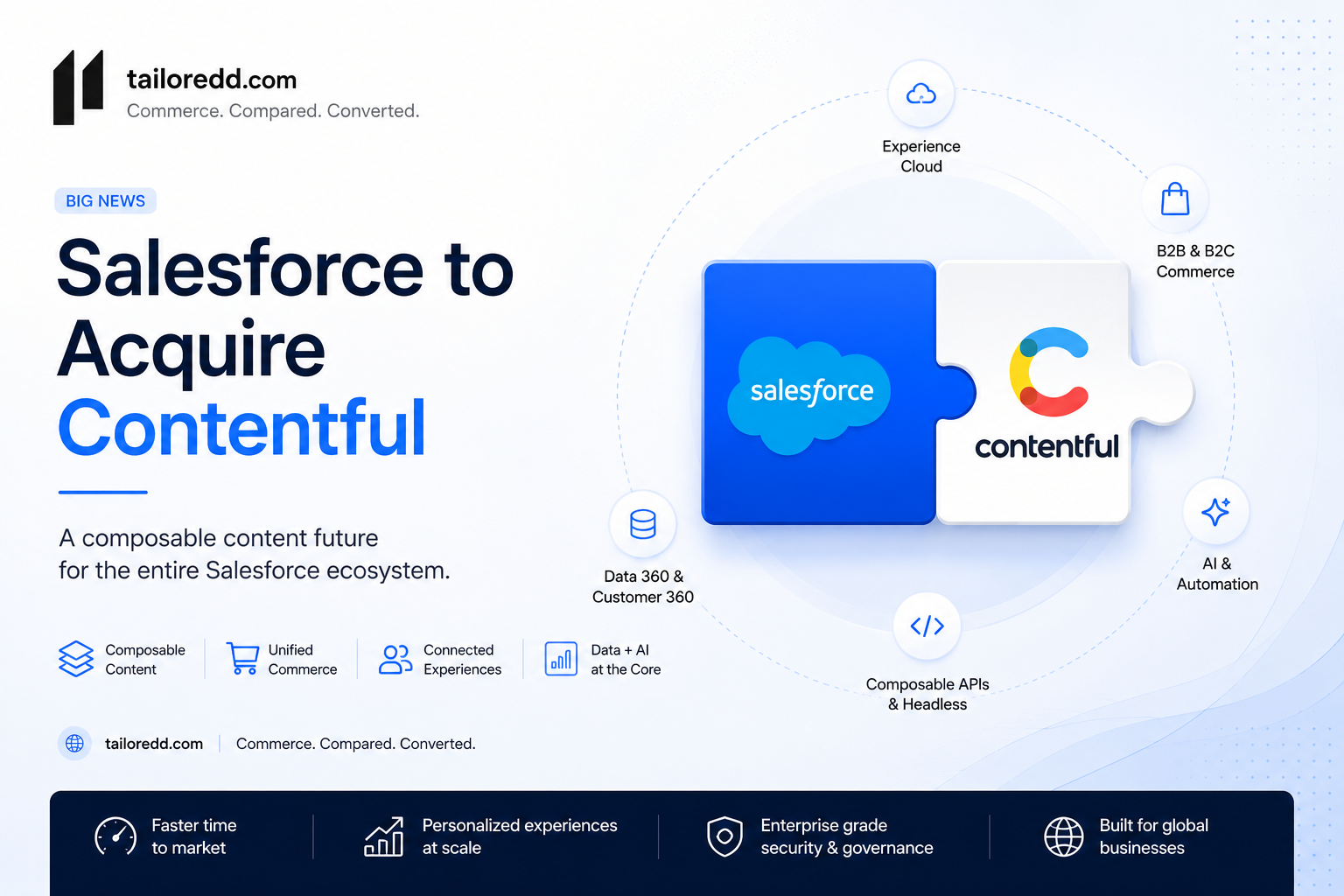
Salesforce’s definitive agreement to acquire Contentful is more than another headline in the martech world. It is a strong signal that the future of digital experiences is not just about selling faster, but about managing content, commerce, data, and AI as one connected system.
Salesforce said the deal will add a native, enterprise-grade content layer to its Headless 360 vision, bringing Contentful’s composable APIs together with Data 360 and Agentforce to deliver personalized experiences across channels. Contentful, meanwhile, says the combination will help modern enterprises dynamically assemble rich digital experiences at scale.
Why B2C Commerce Is Only Part of the Story
For most brands, Salesforce Commerce Cloud has already been a solid answer for B2C. With Page Designer, merchandisers can create reusable page and component types through a visual editor. With Composable Storefront and Managed Runtime, teams can run a headless storefront on a modern, API-driven foundation. That is a powerful setup for commerce teams that need speed, flexibility, and control.
But the bigger story is not B2C alone. The real opportunity is what this acquisition could unlock across the rest of the Salesforce stack.
Experience Cloud Gets a Modern Content Backbone
Experience Cloud is an obvious beneficiary. Salesforce describes it as a way to build branded digital experiences for customers and partners, including portals, help forums, and support sites. Contentful can give those experiences a more modern content backbone, especially where teams need editorial freedom without creating a dependency on constant developer intervention.
B2B Commerce: Content as Part of the Buying Process
B2B Commerce is another major fit. Salesforce positions it as a platform for complex buyer needs — account-based entitlements, pricing, catalogs, and self-service transactions. In that world, content is not decoration. It is part of the buying process: product education, account-specific messaging, technical documentation, region-specific offers, and post-purchase guidance. A composable content layer can help those experiences move faster and feel far more relevant.
The Integration Already Exists
What This Means for Enterprise Teams in India and the US
For enterprises in India, this matters because teams are often asked to do more with leaner budgets, multiple languages, and faster go-to-market expectations. For US teams, it matters because scale, governance, and cross-channel consistency are now table stakes. In both markets, a stronger composable content layer can reduce friction between marketing, commerce, and engineering.
The Takeaway
The market has moved past “CMS versus commerce” thinking. Brands do not need one more silo. They need a content engine that can power storefronts, portals, service journeys, product education, and AI-led interactions without rewriting everything every time the business changes. Salesforce is saying exactly that with this move: content should sit closer to the customer, closer to the data, and closer to the action.
The deal is still subject to customary closing conditions and regulatory approval, but the strategic message is already clear: Salesforce wants to make content as programmable as its data and as intelligent as its AI. If it executes well, Contentful could become one of the most important pieces in the Salesforce platform story.
Thinking through how this affects your Salesforce Commerce Cloud roadmap? Talk to the Tailoredd team — we work across B2C, B2B, and Experience Cloud implementations.
Related Reading
- Salesforce Headless 360: What It Actually Delivers
- Headless Commerce: When It Makes Sense and When It Does Not
- Storefront Next and the Future of SFCC Frontends